

This article was originally shared by our CraneTech, Inc. affiliate.
Overhead cranes and hoists are among the most powerful pieces of equipment found in industrial facilities. They routinely lift and transport heavy loads above personnel, making them necessary to manufacturing, steel production, warehouses, and processing plants. However, the same equipment that improves productivity can also present significant hazards during inspection, maintenance, troubleshooting, and repair if hazardous energy is not properly controlled.
Lockout/Tagout (LOTO) is one of the most important safety procedures technicians can follow when servicing overhead cranes and hoists. OSHA’s Control of Hazardous Energy standard (29 CFR 1910.147) establishes requirements for preventing the unexpected startup of machinery or the release of stored energy that could cause serious injury or death. A well-designed LOTO program not just protects maintenance personnel but also promotes consistency, accountability, and compliance throughout a facility.
What is Lockout Tagout?
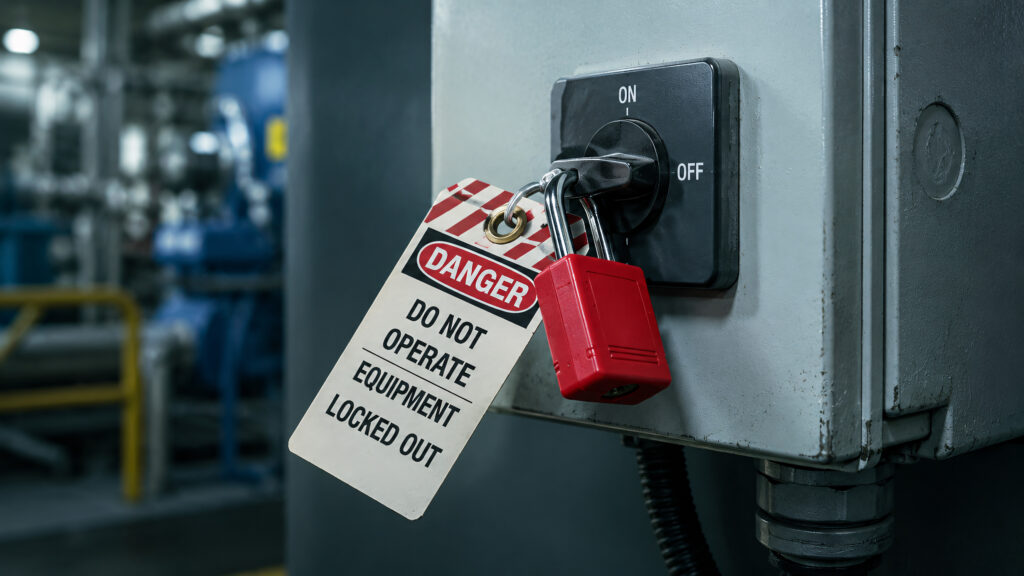
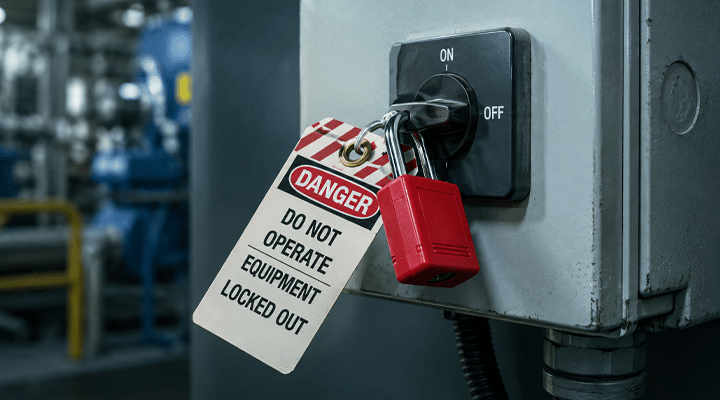
Lockout is the process of physically isolating hazardous energy by applying a lock or other approved locking device that prevents equipment from being energized. Tagout complements the lock by attaching a clearly visible warning tag identifying who applied the lock, why the equipment is out of service, and prohibiting operation until maintenance is complete. While tags communicate critical information, they do not provide physical protection on their own and should be used alongside appropriate lockout devices whenever possible.
For overhead cranes, hazardous energy extends well beyond electrical power. Maintenance personnel may encounter mechanical energy from suspended components, hydraulic or pneumatic pressure, stored spring tension, or even gravity acting on elevated loads. Every potential energy source must be identified and controlled before work begins.
Planning Before Work Begins
Effective Lockout/Tagout starts long before the first lock is applied. Facilities should establish machine-specific energy control procedures for every crane and hoist, identifying all energy sources, isolation points, and shutdown methods. A job safety analysis or point-of-work risk assessment helps identify additional hazards in the surrounding work area and ensures technicians understand the safest approach before beginning maintenance. Employees responsible for applying locks must receive proper training, and procedures should be reviewed periodically to guarantee they remain current.
We highly recommend that all of our customers adopt a company-wide Lockout/tagout policy for their staff that frequently operates and uses heavy equipment such as overhead cranes and hoists.
Every overhead crane and hoist installation is different, so facilities should develop machine-specific Lockout/Tagout (LOTO) procedures that identify all hazardous energy sources and isolation points. However, most maintenance activities follow the same general sequence. The following eight steps outline the basic process used to safely isolate equipment before inspection, servicing, or repair.
1) Prepare for Lockout
Before any work begins, authorized personnel identify all hazardous energy sources and develop a safe plan for isolating the equipment. Operators, nearby employees, and supervisors should also be notified that the crane or hoist will be removed from service.
Preparation includes:
- Identifying all energy sources
- Locating energy isolation points
- Reviewing equipment manuals and procedures
- Confirming the required locks and tags are available
- Performing a Job Safety Analysis (JSA)
- Alerting affected personnel that:
- Equipment will be shut down.
- Lockout/Tagout procedures will be applied.
- Operation of the equipment is prohibited.
2) Shutdown the Equipment
The equipment should always be stopped using its normal operating controls before energy sources are isolated. This helps prevent unnecessary equipment damage and assures a controlled shutdown.
Typical shutdown methods include:
- Stop Button – Press the designated STOP button on the pendant, remote control, or operator station to bring the crane to a normal, controlled stop.
- Control Panel – Some cranes are shut down using controls located on an operator console or electrical control panel. Follow the manufacturer’s recommended shutdown procedure before isolating power.
- Shutdown Switch – Certain crane systems include a dedicated shutdown or disconnect switch that safely removes the equipment from operation prior to lockout. This should not be confused with the main energy isolation device used during Lockout/Tagout.
Important: Stopping a crane with its normal operating controls does not constitute Lockout/Tagout. The equipment must still be isolated from all hazardous energy sources and secured with approved lockout devices before maintenance or inspection begins.
3) Isolate (De-Energize) all Energy Sources
Once the crane has been shut down, every hazardous energy source must be physically isolated to prevent accidental energization.
For most overhead cranes and electric hoists, the primary hazardous energy source is electrical power. However, depending on the crane’s design and installed options, technicians may also need to isolate hydraulic, pneumatic, mechanical, or gravitational energy before maintenance can begin. Every applicable energy source must be identified and secured before work starts.
Isolation methods may include:
- Electrical Disconnect Switch – Open the main disconnect switch to completely isolate electrical power to the crane or hoist. The disconnect should be capable of being locked in the OFF position.
- Circuit Breakers – In some installations, circuit breakers are opened or “racked out” to disconnect electrical power. Approved breaker lockout devices should be used to prevent the breaker from being reset.
- Hydraulic or Pneumatic Valves – Close and isolate hydraulic or compressed air supply valves to prevent pressure from reaching cylinders, brakes, or other powered components. Any residual pressure should be relieved before work begins.
- Mechanical Blocks – Install blocks, pins, or other approved restraints to prevent unintended movement of bridges, trolleys, hoists, or suspended components due to gravity or mechanical forces.
4) Apply Lockout Tagout Devices
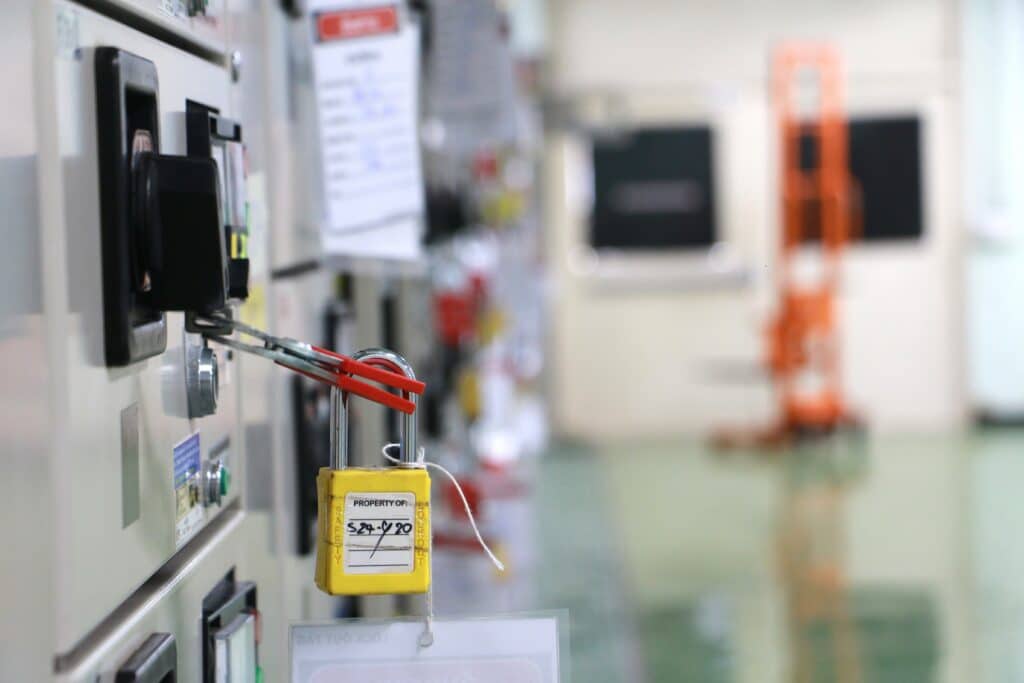
Each authorized worker applies their own personal lock and identification tag to every energy isolation point. Equipment must never be capable of being re-energized until every worker has removed their own lock.
Common lockout devices include:
- Padlocks
- Lockout hasps
- Breaker lockouts
- Breaker lockouts
- Plug lockouts
- Valve lockouts
Tags should identify:
- Employee name
- Equipment name & identification
- Description of the work being done
- Reason for lockout
- Date and time applied.
- “DO NOT OPERATE” warning.
Remember: Tags furnish important communication, but they do not physically prevent equipment from being energized.
5) Release Stored Energy & Verify Zero-Stored Energy State
Isolating the power source alone is not enough. Any stored or residual energy must also be safely released before work begins.
This may include:
- Bleeding hydraulic pressure
- Venting compressed air
- Draining fluids
- Lowering suspended loads
- Discharging electrical capacitors
- Blocking moving mechanical components
Finally, verify that the equipment is completely de-energized by attempting a controlled startup or performing other required testing procedures.
6) Perform Maintenance, Inspection or Repair
Only after the equipment has been fully isolated and a zero-energy state has been verified should maintenance begin.
Before starting work, ensure:
- Equipment is fully isolated.
- Zero-energy state has been confirmed.
- Everyone involved understands the work being performed.
Supervisors should maintain monitoring of the work to ensure procedures are followed throughout the job.
7) Restore the Equipment
Once maintenance has been completed, carefully inspect the crane before restoring power.
Before removing locks:
- Remove all tools and materials.
- Reinstall guards and safety devices
- Verify components are properly assembled.
- Confirm the work has been completed.
- Ensure all personnel are safely clear of the equipment.
Only the employee/s who installed a lock should remove it unless an approved written procedure specifies otherwise.
8) Notify Personnel & Return the Equipment to Service
After every lock and tag has been removed, notify affected employees that the equipment is ready to be returned to service.
Before restarting:
- Inform personnel that the equipment is being re-energized
- Ensure all workers are clear of the area.
- Restart the equipment following normal operating procedures.
- Verify proper operation before returning it to production.
Considerations
Even experienced maintenance teams can make mistakes if procedures become routine or shortcuts are taken. Common errors include failing to release stored energy, relying on tags without physical locks, allowing someone else to remove a worker’s lock, skipping verification testing, or using a single lock to protect multiple workers. Any one of these mistakes can result in unexpected equipment movement or energization with potentially serious consequences.
Building a Strong Safety Culture
An effective Lockout/Tagout program extends beyond written procedures. Facilities should provide ongoing employee training, conduct routine audits of energy-control procedures, and review machine-specific instructions whenever equipment is modified or operating conditions change. Regular program reviews help verify that procedures remain accurate, employees continue following established safety practices, and new personnel receive the training necessary to perform their work safely.
At Steel River Foundry, we believe that effective safety programs begin with knowledgeable people. Through hands-on training delivered by experienced industry professionals and our trusted training partners, we help maintenance personnel, supervisors, and safety professionals develop the skills and confidence needed to safely isolate hazardous energy, comply with OSHA requirements, and perform maintenance tasks responsibly. Whether your organization is strengthening an existing safety program or training new employees, investing in quality Lockout/Tagout education helps build a safer workforce, improve regulatory compliance, and ensure every technician returns home safely at the end of the day.

