

You don’t have to be the person attaching the sling to be responsible for the outcome.
Safe lifting operations begin long before a crane leaves the ground. Maintenance managers who understand the fundamentals of rigging are better equipped to protect their employees, reduce equipment damage, improve job planning, and recognize hazards before they become incidents. Even a basic understanding of sling selection, inspection, storage, and removal criteria can have a lasting impact on both safety and productivity.
For organizations that regularly perform maintenance involving overhead cranes, mobile cranes, hoists, or industrial lifting equipment, formal rigging training helps establish consistent practices across the entire maintenance team. Programs that combine classroom instruction with hands-on lifting exercises give supervisors and technicians the confidence to recognize hazards, inspect equipment properly, and perform lifts in accordance with OSHA and ASME requirements.
1. Every Lift Begins with Proper Sling Selection
Selecting the appropriate sling is one of the most important decisions made before any load leaves the ground. While qualified riggers are responsible for choosing and attaching the correct sling for a specific lift, maintenance managers play an equally important role by ensuring the proper lifting equipment is available, inspected, and suitable for the work being performed. Without the right equipment on hand, even experienced personnel may be forced to improvise—introducing unnecessary risk before the lift has even begun.
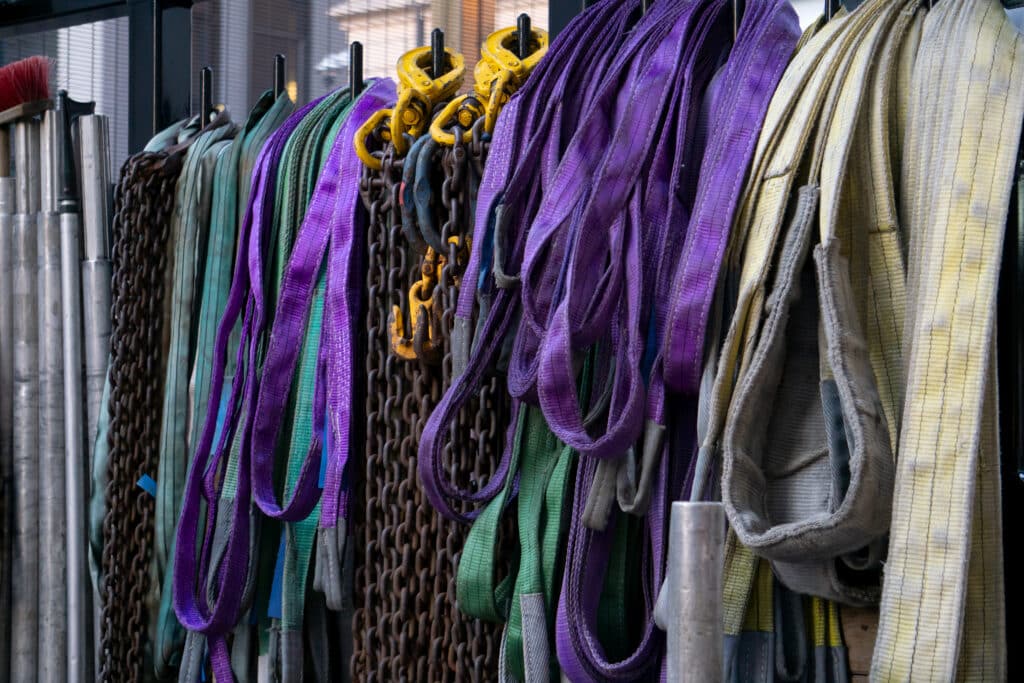
Not all slings are designed for the same applications. Wire rope slings are valued for their strength, durability, and resistance to heat, making them well suited for demanding industrial environments. Alloy chain slings are commonly used when high temperatures, abrasive conditions, or sharp edges are present and offer the added advantage of being repaired and re-certified when appropriate. Synthetic web slings and roundslings provide excellent load protection for finished surfaces and irregularly shaped equipment, but they are more susceptible to cuts, abrasion, ultraviolet exposure, and chemical damage if not properly selected and maintained.
Proper sling selection extends well beyond lifting capacity alone. The weight of the load is only one factor in determining whether a sling is appropriate. Maintenance personnel should also consider the load’s shape, center of gravity, lifting points, environmental conditions, temperature, potential exposure to chemicals, and the presence of sharp edges that could damage the sling during the lift. Selecting a sling simply because it has a sufficient weight rating can create a false sense of security if these other factors are overlooked.
Understanding these fundamentals allows maintenance managers to better support their teams, make informed purchasing decisions, and recognize when additional planning or specialized rigging equipment may be necessary. While they may never be the individual attaching the sling to the load, having a working knowledge of sling selection helps ensure every lift begins with the safest possible foundation.
2. Why Load Angles Matter More Than Most People Realize
One of the most common misconceptions in lifting operations is that a sling’s rated capacity remains the same regardless of how it is used. In reality, the angle at which a sling is positioned has a significant impact on the amount of force it must withstand. As sling angles become flatter, the tension placed on each sling leg increases—sometimes dramatically—even though the weight of the load remains unchanged.
Consider a two-leg sling lifting a piece of equipment. When the sling legs are nearly vertical, each leg carries a relatively small portion of the load. However, as the sling legs spread farther apart, the load is distributed at a shallower angle, increasing the tension within each sling. A sling that is well within its rated capacity during one lift may be overloaded during another simply because the lifting angle changed.
For maintenance managers, understanding this principle is essential when planning equipment removals, machine installations, or overhead maintenance activities. A lift that appears routine can quickly become hazardous if sling angles are not considered during the planning process. Even experienced personnel can overlook this factor when working in confined spaces or attempting to avoid nearby obstructions, causing sling angles to decrease without fully recognizing the additional stress placed on the rigging.
Load angles also influence how a load behaves once it leaves the ground. Improper sling angles can reduce stability, increase side loading, shift the center of gravity, and make it more difficult to control the load throughout the lift. These conditions place additional stress not only on the slings themselves, but also on hooks, shackles, lifting lugs, and the crane or hoist performing the lift.
While maintenance managers are not expected to calculate sling tension for every lift, they should understand that every change in sling angle changes the forces acting on the rigging system. Recognizing this relationship allows them to ask better questions during lift planning, identify situations that require additional engineering or specialized rigging equipment, and ensure lifting operations are performed within the limits established by OSHA, ASME standards, and the equipment manufacturer.
| Sling Angle | Approximate Tension on Each Sling Leg* |
|---|---|
| 90° | 50% of the load |
| 60° | 58% of the load |
| 45° | 71% of the load |
| 30° | 100% of the load |
*Approximate values for a symmetrical two-leg sling lifting a balanced load. Actual forces depend on the lift configuration and should always be calculated or verified using accepted rigging practices.
3. Rigging Equipment Should Be Inspected Before Every Lift
No matter how well a sling is designed or how carefully it has been used, rigging equipment does not last forever. Every lift subjects slings, hooks, shackles, and other hardware to wear, abrasion, environmental exposure, and repeated loading cycles that gradually reduce their service life. For this reason, OSHA and ASME standards emphasize that rigging equipment should be inspected before each use, with more thorough documented inspections performed at regular intervals based on service conditions.
Many rigging failures don’t occur because the wrong equipment was selected—they occur because damaged equipment remained in service long after warning signs appeared. A frayed synthetic sling, a kinked wire rope sling, an elongated chain link, or a cracked hook may seem like minor defects until the moment the equipment is placed under load. Unfortunately, by the time a failure becomes obvious during a lift, it’s often too late to prevent property damage, equipment loss, or serious injury.
While qualified personnel are responsible for determining whether rigging equipment is fit for service, maintenance managers should understand the types of conditions that warrant immediate attention. Wire rope slings should be examined for broken wires, crushed or flattened sections, severe corrosion, birdcaging, and damaged fittings. Synthetic web slings and roundslings should be checked for cuts, tears, abrasion, chemical damage, melted fibers, damaged stitching, and excessive ultraviolet degradation. Chain slings should be inspected for bent or elongated links, excessive wear, cracks, damaged hooks, and missing identification tags that verify their rated capacity.
Equally important is fostering a workplace culture where employees feel empowered to remove questionable equipment from service without hesitation. When production schedules are tight, it can be tempting to overlook minor damage or assume a sling is “good for one more lift.” In reality, removing damaged rigging from service is one of the simplest and most effective ways to prevent a serious incident. Replacing a sling is inexpensive compared to the cost of a dropped load, damaged equipment, or an injured employee.
For maintenance managers, understanding basic inspection principles improves more than safety—it strengthens purchasing decisions, replacement planning, and preventive maintenance programs. When managers know what deterioration looks like, they can ensure damaged equipment is identified early, replaced promptly, and never allowed to become the weak link in an otherwise well-planned lift.
4. Proper Storage Is Part of Proper Rigging
Rigging equipment doesn’t only experience wear during lifting operations. In many facilities, some of the greatest damage occurs while slings are sitting idle between jobs. Improper storage exposes rigging to moisture, ultraviolet light, chemical contamination, excessive heat, welding sparks, and physical abuse—conditions that can gradually weaken lifting equipment long before it’s ever placed under load.
Synthetic web slings and roundslings are especially vulnerable to environmental damage. Prolonged exposure to direct sunlight can degrade synthetic fibers over time, while oils, solvents, acids, and other chemicals may weaken the material in ways that aren’t immediately visible. Slings left lying on concrete floors can absorb moisture and collect dirt or metal shavings, and those stored near welding operations are susceptible to burns from sparks or molten slag. Even something as simple as tying knots in a synthetic sling or dragging it across rough surfaces can permanently reduce its strength.
Wire rope and alloy chain slings are more resistant to harsh environments, but they are not immune to damage. Wire rope slings can corrode when stored in damp conditions, develop kinks if improperly coiled, or suffer crushed strands when heavy materials are stacked on top of them. Chain slings may withstand heat and abrasion better than synthetic materials, but they should still be protected from corrosion, impact damage, and unnecessary wear. Regardless of sling type, storing rigging where forklifts, carts, or other equipment can drive over it creates unnecessary risk and often leads to damage that requires the equipment to be removed from service.
Good storage practices are simple but effective. Slings should be cleaned after use when necessary, stored off the floor on designated racks or hooks, protected from excessive moisture and direct sunlight, and organized so damaged equipment can be easily identified and removed. Keeping rigging in a clean, designated storage area also makes inspections easier and helps ensure employees can quickly locate the appropriate equipment for each lift.
For maintenance managers, proper storage is about more than organization—it’s about protecting an investment. Well-maintained rigging equipment lasts longer, performs more reliably, and is less likely to be removed from service prematurely due to preventable damage. By establishing clear storage procedures and reinforcing them throughout the facility, managers can improve safety, reduce replacement costs, and help ensure that every sling is ready for service when it’s needed.
5. Knowing When Rigging Equipment Must Be Removed from Service
One of the most important responsibilities in any lifting program is recognizing when rigging equipment has reached the end of its safe service life. While every organization hopes to maximize the lifespan of its equipment, slings and rigging hardware should never remain in service simply because they have “always worked before.” Safe lifting depends on knowing when damage has crossed the line from acceptable wear to an unacceptable risk.
Industry standards provide clear guidance for removing damaged rigging from service, and those decisions should be based on established criteria—not personal judgment or production demands. OSHA regulations, ASME standards, and equipment manufacturers all publish removal guidelines for wire rope slings, synthetic slings, chain slings, hooks, shackles, and other rigging components. When those criteria are met, the equipment should be immediately removed from service until it can be properly evaluated, repaired where permitted, or replaced.
For maintenance managers, understanding these requirements is just as important as understanding inspection procedures. They may not be the person performing the inspection before every lift, but they are often responsible for ensuring employees have the authority—and the expectation—to remove questionable equipment without hesitation. When a damaged sling is discovered, the goal should never be to determine whether it can survive one more lift. The goal is to prevent that sling from becoming the weakest link in the lifting system.
An effective rigging program also includes clear procedures for tagging, isolating, and replacing damaged equipment. Slings that fail inspection should be removed from circulation immediately so they cannot accidentally be returned to service by another employee. Establishing designated storage areas for out-of-service equipment, maintaining replacement inventory, and documenting inspections all help create a safer and more consistent lifting operation.
Ultimately, one of the clearest signs of a strong safety culture is how an organization responds to damaged equipment. In facilities with mature lifting programs, employees understand that reporting damaged rigging is viewed as preventing an incident—not causing an inconvenience. Maintenance managers who reinforce that mindset help build an environment where safety decisions are based on objective standards rather than schedule pressure, reducing the likelihood of equipment failures, costly downtime, and workplace injuries.
6. Rigging Knowledge Makes Better Maintenance Leaders
Maintenance managers aren’t expected to perform every lift or become certified rigging specialists. However, they are responsible for creating an environment where lifting operations are planned, supervised, and executed safely. That begins with understanding the fundamentals. Knowing how to select the appropriate sling, recognizing how load angles affect lifting forces, identifying damaged rigging, ensuring equipment is stored properly, and understanding when it must be removed from service all contribute to safer and more efficient maintenance operations.
Perhaps more importantly, this knowledge allows managers to ask the right questions before a lift begins. Is the correct sling being used? Has the equipment been inspected? Are the sling angles appropriate for the load? Has damaged rigging been removed from service? These simple questions can prevent costly equipment damage, unplanned downtime, OSHA violations, and, most importantly, serious injuries.
As facilities continue to rely on increasingly complex lifting operations, a basic understanding of rigging is no longer just a skill for the individual attaching the load—it’s an essential competency for anyone responsible for maintenance planning and supervision. Maintenance managers who understand these principles are better equipped to support their teams, improve operational consistency, and build a stronger culture of safety throughout their organization.
For organizations that routinely perform equipment installations, machinery repairs, overhead crane maintenance, or other lifting activities, formal rigging training provides the next step. Hands-on instruction helps maintenance personnel apply these principles in real-world scenarios, ensuring they not only understand the standards but can confidently put them into practice. Investing in that knowledge protects employees, extends the service life of lifting equipment, and helps ensure every lift is completed safely and efficiently.
Build a Safer, More Confident Maintenance Teamders
Understanding the fundamentals of rigging is an investment in safer maintenance practices, more efficient lifting operations, and stronger leadership. At Steel River Foundry, our experienced instructors combine decades of real-world field experience with hands-on, practical training designed for today’s industrial environments. Whether you’re looking to strengthen the knowledge of maintenance managers, technicians, supervisors, or dedicated rigging personnel, our programs focus on the skills needed to identify hazards, make informed lifting decisions, and work in accordance with OSHA and ASME standards. Through classroom instruction, hands-on exercises, and real-world applications, Steel River Foundry helps organizations build safer, more confident teams—because every successful lift begins with the right knowledge.

